Geographic Farming for Real Estate Agents: How to Own Your Neighborhood
Geographic farming turns a specific neighborhood into your primary lead source. How to choose your farm area, build name recognition, and track ROI over time.
Hailey JeonMarketer, vProp13 min read
TL;DR
Most agents spend their careers chasing leads across an entire metro area, driving 40 minutes to appointments and competing against a dozen other agents for the same name recognition. Geographic farming flips that model, going deep into one neighborhood instead of wide across a whole city.
That usually means picking a specific area of 200 to 500 homes and marketing to it consistently over months, so the agent becomes the name that neighborhood thinks of first, before a listing even hits the market.
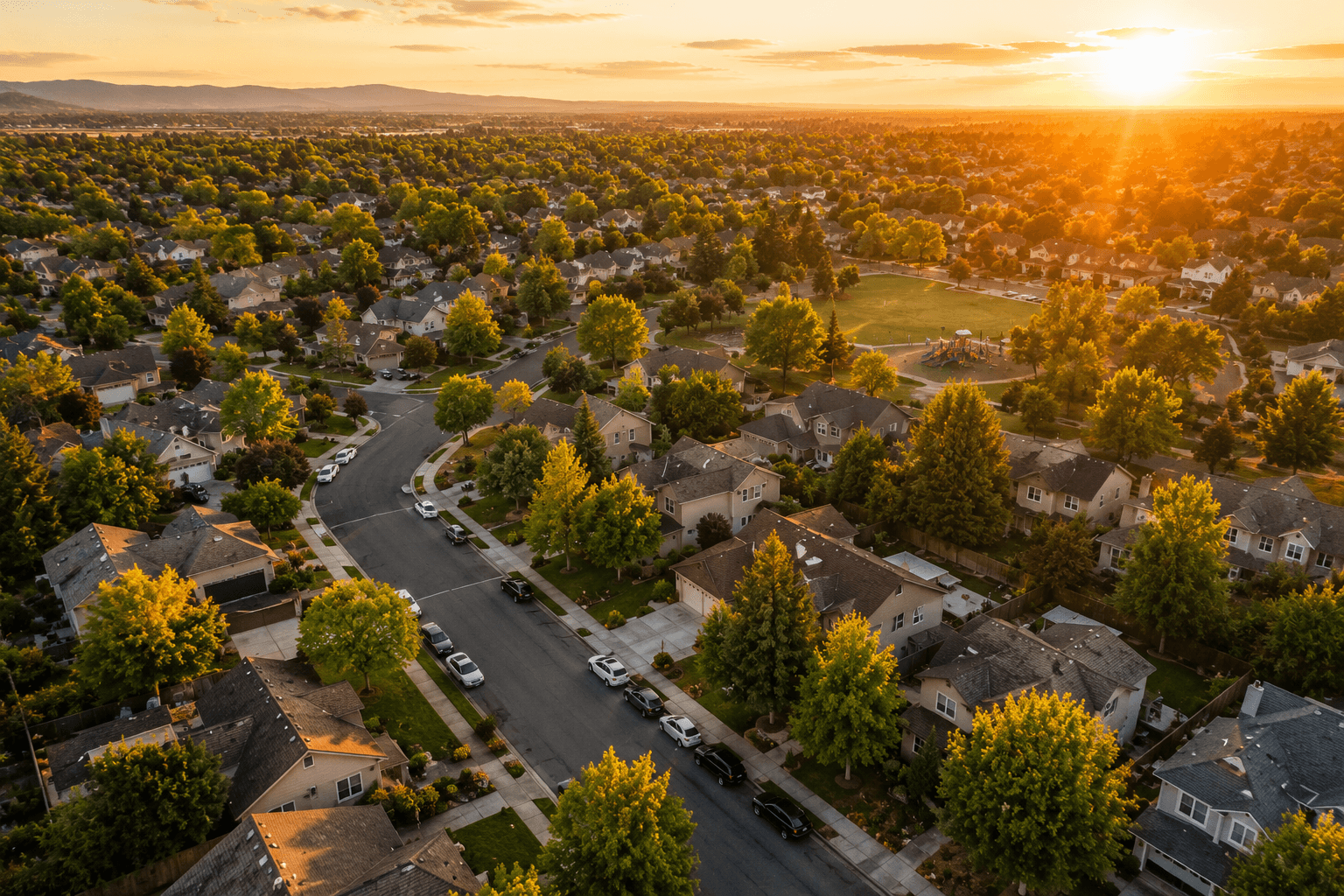
Most real estate agents spend their careers chasing leads across an entire metro area. They drive 40 minutes to a listing appointment, compete against a dozen other agents, and hope name recognition sticks. Geographic farming flips that model on its head. Instead of going wide, you go deep into one neighborhood and become the agent everyone there thinks of first.
Geographic farming in real estate means choosing a specific area, typically 200 to 500 homes, and marketing to it consistently over months and years. You study the streets. You learn who's lived there since the 1990s and who just moved in last spring. You show up in mailboxes, at block parties, and in local Facebook groups until your name is as familiar as the neighborhood coffee shop.
It takes patience. It takes discipline. But agents who commit to farming a neighborhood often find that 12 to 18 months in, the phone starts ringing with listings they never had to chase.
This guide covers how to pick the right farm, what tactics actually move the needle, and how to track whether your investment is paying off.
Why Geographic Farming Still Works in 2026
You might wonder whether direct mail and door knocking feel outdated when so many buyers start their search on Zillow or Realtor.com. Fair question. But the channel matters less than the consistency. Geographic farming works through repeated, local visibility.
NAR data consistently shows that sellers choose their agent based on reputation and referrals more than any other factor. When a homeowner sees your name on a postcard in January, your market report in March, your sold sign down the street in May, and your face at the neighborhood garage sale in June, you become the default choice. That kind of familiarity is almost impossible to build when you're spread across 15 zip codes.
There's also a compounding effect. Each listing you win in the farm becomes social proof for the next one. Neighbors notice sold signs. They talk. One closed deal in a farm area can generate two or three more within a year if you market it right.
Hailey Jeon
Marketer, vProp
Hailey Jeon is a marketer at vProp, writing about real estate marketing, listing videos, and the tools agents use to win and market listings. Hailey's guides focus on practical steps agents can use on their very next listing.
Geographic farming pairs well with your broader real estate lead generation strategy. Your farm becomes a reliable pipeline of listings while you continue working referrals, online leads, and other sources.
How to Choose the Right Farm Area
Picking the wrong neighborhood is the single fastest way to waste money on farming. Not every area is a good candidate. You want to look at several factors before committing.
Turnover Rate
This is the most important number. Turnover rate tells you what percentage of homes in an area sell each year. You can calculate it by dividing the number of homes sold in the past 12 months by the total number of homes in the area.
A healthy target is 6% or higher. Some agents farm areas with 8% to 10% turnover and see faster results. If the turnover rate is below 5%, you'll probably wait a long time between opportunities.
Pull sold data from your MLS for the past two to three years. Look for consistency. A neighborhood that had 7% turnover last year but 3% the year before might have had a one-time spike from a new development.
Size: 200 to 500 Homes
Too small and you won't have enough transactions to justify your marketing spend. Too large and you can't afford consistent outreach or personal touches. For most agents, 200 to 500 homes hits a sweet spot.
If you're on a tight budget, start with 200 homes and expand once you close your first couple of deals from the farm. Some agents begin with a single subdivision and grow from there.
Proximity
Your farm should be close enough that you can drive there in 15 to 20 minutes. You'll need to visit regularly for door knocking, delivering materials, attending events, and previewing listings. If it's 45 minutes away, you'll find excuses to skip those visits, and consistency is everything in farming.
Competition
Check how many other agents are actively marketing in the area. If a well-known agent already dominates the farm and wins 30% of the listings there, breaking through will be harder. That doesn't mean it's impossible, but you should know what you're up against.
Look at who's listed and sold the most homes in the area over the past two years. If listings are spread across many agents with no clear leader, that's often a better opportunity.
Research Your Farm Before You Start
Before you send a single postcard, spend a few weeks learning your farm inside and out. This research shapes your messaging and helps you sound like a true local expert.
Key Data Points to Gather
Average home price and how it's changed over the past three years
Days on market for recent sales
Price per square foot trends
Listing-to-sale price ratio (are homes selling above or below asking?)
Inventory levels (how many active listings right now?)
Your MLS should have most of this. Services like Altos Research or local board reports can fill in gaps.
Demographics and Community Details
Go beyond the numbers. Learn the school districts and their ratings. Find out about HOA rules if applicable. Note the parks, restaurants, and amenities nearby. Understand commute times to major employment centers.
This kind of knowledge shows up in your marketing. When you can write in a market report that "the median price on Oak Street rose 4.2% this quarter while the rest of the city stayed flat," you sound like someone who actually pays attention. Homeowners notice that level of detail.
Understanding your neighborhood marketing angle also helps you speak to what buyers care about when sellers ask how you'd position their home.
Farming Tactics That Build Name Recognition
Farming works through repetition across multiple touchpoints. No single tactic wins on its own. The combination of showing up in different ways is what builds the familiarity that converts to listings.
Direct Mail
Postcards remain the backbone of most farming campaigns. They're affordable, tangible, and hard to ignore when they land in a mailbox.
Effective postcard types include:
Just Listed / Just Sold cards. These prove you're active in the area. Include the address, sale price, and a professional photo.
Monthly or quarterly market reports. Share real data about the neighborhood. Average sale price, number of homes sold, days on market. Homeowners care about their home's value, so give them the numbers.
Seasonal touchpoints. Holiday greetings, back-to-school reminders, local event calendars. These keep you visible even when you don't have a new listing to promote.
Budget roughly $1 to $2 per household per mailing. For a 300-home farm with monthly mailings, that's $3,600 to $7,200 per year. It sounds like a lot until you consider that one listing at a $450,000 price point could net you $10,000 or more in commission.
Pair your direct mail with a solid real estate newsletter that you can email to homeowners who opt in from your mailings.
Door Knocking
This one scares a lot of agents, which is exactly why it works so well. Most of your competitors won't do it.
You don't need a hard sales pitch. Drop off a small gift, like a local business coupon book or a simple market snapshot for their street. Introduce yourself. Ask if they have any questions about the market. Keep it to two minutes unless they want to chat longer.
Aim to knock 20 to 30 doors per session, once or twice a month. Over time, people start recognizing you. Some will wave from the yard before you even reach the door. That's when you know the farming is working.
Community Involvement
Sponsor a little league team. Host a neighborhood cleanup day. Organize a block party or a shred-it event where homeowners can safely destroy old documents. These activities put you in front of residents in a context that has nothing to do with selling houses, which actually makes them more likely to think of you when they're ready to sell.
If the neighborhood has an HOA or community association, attend the meetings. Volunteer for committees. Becoming a known face in community leadership circles gives you access to information and relationships that postcards alone can't provide.
Digital Farming: Expanding Your Reach Online
Physical presence in your farm matters. But pairing it with a digital strategy can accelerate your results significantly.
Hyperlocal Content
Create content that speaks specifically to your farm area. Blog posts about the neighborhood, market updates for the specific zip code, guides to local restaurants and parks. This kind of content ranks well in local search because few agents bother to create it.
A monthly "state of the market" video for your farm area, posted on YouTube and shared on social media, positions you as the go-to source for hyperlocal real estate information. Keep the videos short, around two to three minutes. Share one or two data points, mention a notable sale, and highlight something happening in the community.
For more on building a hyperlocal content engine, check out these low-cost marketing ideas that work well alongside a farming strategy.
Google Business Profile
Make sure your Google Business Profile is optimized for local search. Post updates regularly, respond to reviews, and include your farm area in your service descriptions. When a homeowner in your farm Googles "real estate agent near [neighborhood name]," you want to show up.
Social Media and Community Groups
Many neighborhoods have private Facebook groups or Nextdoor pages. Participate genuinely. Don't just post listings. Answer questions about local services, share community news, and be helpful. When someone in the group eventually asks for an agent recommendation, the members who've seen you being useful will mention your name.
Email Marketing
As you meet homeowners through door knocking and events, collect email addresses (with permission, of course). A monthly email marketing newsletter with market updates and local news keeps you top of mind between postcards and visits.
Consistency and Timeline: What to Expect
Geographic farming is a long game. If you need closings next month, farming won't deliver. But if you're building a business that generates predictable listing opportunities year after year, farming is one of the most reliable strategies out there.
The Typical Timeline
Months 1 to 3: You're invisible. Homeowners are tossing your postcards without reading them. This is normal. Keep going.
Months 4 to 6: Some homeowners start recognizing your name. You might get a few calls asking about market values. These are early signals.
Months 7 to 12: If you've been consistent, you'll likely win your first listing from the farm. This is where the compounding begins. Your Just Sold postcard validates your presence.
Year 2 and beyond: By your second year, you should be capturing a measurable share of listings in the farm. Top farming agents often win 15% to 25% of the listings in their area after two to three years.
The key word in that timeline is "consistent." Agents who mail for three months, skip two months, then start again rarely see results. The homeowners need to see you repeatedly over a sustained period before trust develops.
Tracking Your Farming ROI
Farming costs real money, so you need to track whether it's paying off. Set up a simple spreadsheet or use your CRM to monitor these metrics.
Cost Per Lead
Add up all your farming expenses for the quarter: printing, postage, door-knocking supplies, event costs, digital ad spend. Divide by the number of leads generated from the farm (calls, emails, home valuation requests). This tells you how efficiently your farming budget converts to opportunities.
Listings Won
Track every listing you win from the farm area. Note how the seller found you. Was it the postcards? A referral from a neighbor you met door knocking? Seeing your sign down the street? Over time, patterns will emerge that tell you which tactics deserve more investment.
Market Share
Calculate your share of total listings in the farm each quarter. This is your ultimate scorecard. If 20 homes sold in the farm this year and you listed 4 of them, that's a 20% market share. Track this number over time to see whether your farming is gaining traction.
If you want to learn more about turning farm leads into actual listing appointments, this guide on how to get more listings covers the conversion side of the equation.
Common Geographic Farming Mistakes
Even committed agents sometimes sabotage their farming efforts. Watch out for these pitfalls.
Choosing an Area That's Too Large
Farming 2,000 homes sounds ambitious, but you'll run out of budget before you build any real recognition. Start with 200 to 500 homes. Depth beats breadth in farming every time.
Being Inconsistent
Mailing every month for three months, then disappearing for six, then restarting. Homeowners won't remember you if your outreach is sporadic. Commit to a schedule and stick with it for at least 12 months before evaluating results.
Relying on a Single Channel
Postcards alone won't cut it. Door knocking alone won't cut it. The power of farming comes from showing up in multiple ways: mail, in person, online, at events. Each touchpoint reinforces the others.
No Follow-Up System
When a homeowner calls to ask about their home's value, that's a warm lead. If you don't have a system to follow up within 24 hours and then stay in touch, you'll lose the opportunity. Use a CRM to track every contact from the farm and set follow-up reminders.
Ignoring the Data
If your turnover rate drops or a dominant agent enters the market, you need to adjust. Review your farm's performance quarterly. Sometimes the right move is to shift your farm boundaries or increase your marketing frequency.
Getting Started This Month
You don't need a massive budget or a complex plan to start farming. Pick a neighborhood. Pull the MLS data. Order your first batch of postcards. Block out two hours next Saturday to knock on doors.
Geographic farming in real estate rewards agents who show up consistently, provide genuine value, and play the long game. It probably won't be the fastest path to your next commission check. But a year from now, you could be the agent that an entire neighborhood trusts by default. That kind of positioning is hard to buy and even harder for competitors to take away.
Start small. Stay consistent. Let the compounding do its work.
Frequently Asked Questions
What does geographic farming actually mean in real estate?
Choosing a specific area, typically 200 to 500 homes, and marketing to it consistently over months and years instead of chasing leads across an entire metro area.
How long does geographic farming take to pay off?
It takes patience and discipline; results build over months and years rather than immediately, as name recognition compounds in one area.
What does farming a neighborhood actually involve day to day?
Studying the streets, learning who's lived there for years versus who just moved in, and consistently showing up in mailboxes, block parties, and local Facebook groups.
 Hailey JeonMarketer, vProp13 min read