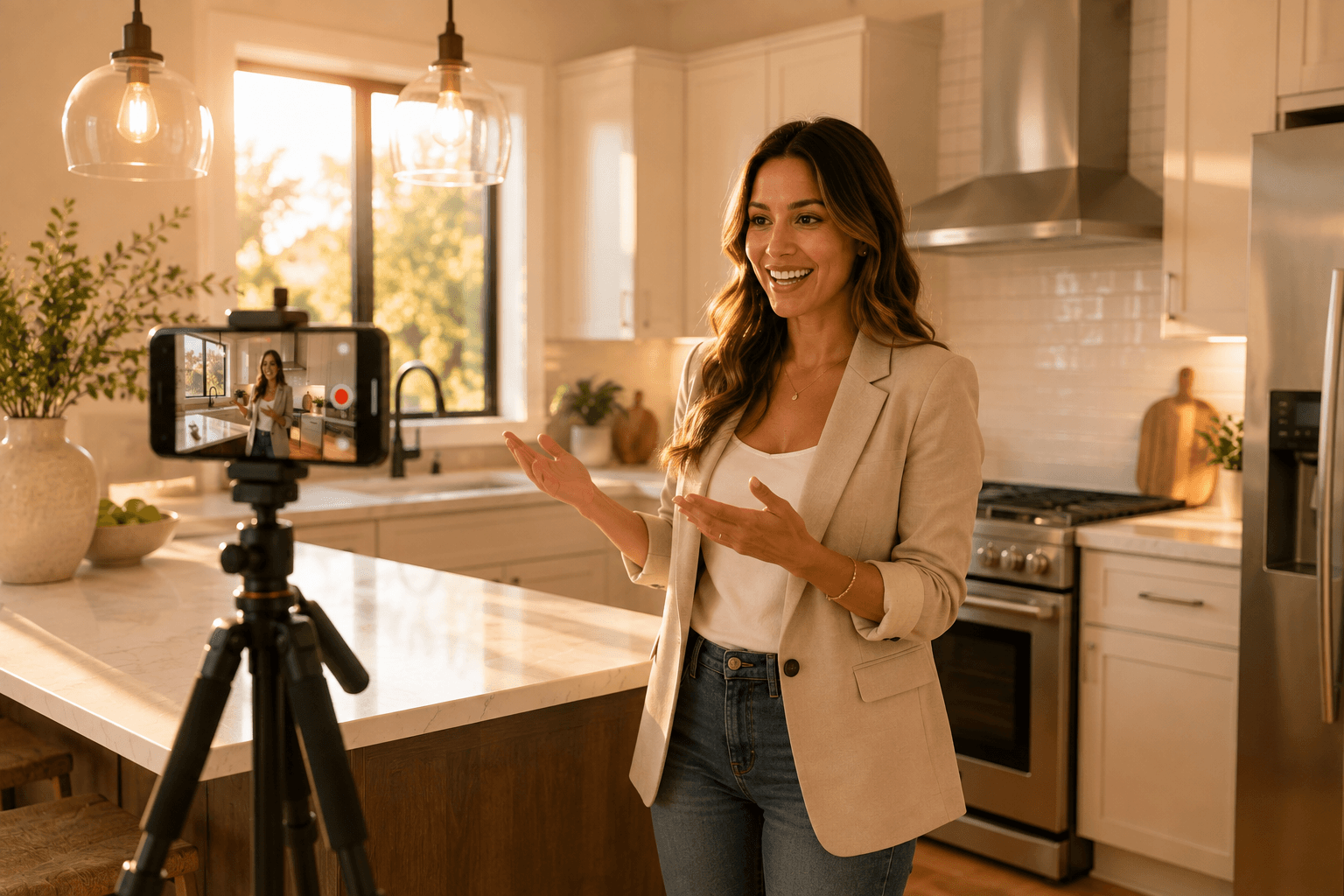
Real Estate Social Media Marketing: The Complete Strategy Guide
A platform-by-platform social media strategy for real estate agents. Content pillars, posting schedules, paid vs organic, and the metrics that actually matter.
Hailey JeonMarketer, vProp13 min read
TL;DR
Most agents know they're supposed to be active on social media, but far fewer know what to actually post, which platforms deserve the effort, or how to turn followers into real clients. Posting a listing photo every few days and hoping for the best isn't a strategy.
This guide covers platform-by-platform tactics, content types, paid versus organic approaches, and posting cadence, so social media becomes a system that generates leads instead of a chore that gets skipped during busy weeks.
Most real estate agents know they should be on social media. Fewer know what to actually post, which platforms deserve their time, or how to turn followers into clients. If your social media strategy consists of posting a listing photo every few days and hoping for the best, you're probably leaving deals on the table.
This guide covers the full picture of real estate social media marketing in 2026. We'll walk through platform strategies, content types, paid vs organic tactics, posting schedules, and the metrics worth tracking. Whether you've been posting for years or you're still figuring out how to start a social media page, this is the strategy layer that ties everything together.
Where Social Media Stands for Real Estate in 2026
Social media isn't optional for agents anymore. According to NAR's 2025 REALTOR Technology Survey, 75% of Realtors use social media for business, and more than half check it daily for work. But usage doesn't equal results. A large portion of agents post inconsistently, stick to a single platform, or never measure what's working.
The platform mix has shifted quite a bit over the past two years. Here's a quick snapshot of where the major platforms stand for real estate:
Instagram remains the top platform for agents. Over 60% of US adults aged 25-44 use it regularly. Reels and carousels get the best organic reach.
Facebook is still huge for local community engagement, especially with homeowners aged 35-65. Groups and Marketplace are where the action is.
Hailey Jeon
Marketer, vProp
Hailey Jeon is a marketer at vProp, writing about real estate marketing, listing videos, and the tools agents use to win and market listings. Hailey's guides focus on practical steps agents can use on their very next listing.
TikTok has matured as a real estate platform. It's no longer just for Gen Z. Millennial first-time buyers are actively searching for home tours and market advice on TikTok.
YouTube is the second-largest search engine, and real estate queries on YouTube continue to grow year over year. Long-form content here has serious staying power.
LinkedIn tends to be underrated by residential agents, but it's a strong channel for referrals, relocation clients, and connections with other professionals.
The agents who are winning right now aren't on every platform. They've picked two or three and gone deep.
Platform-by-Platform Strategy
Not every platform works the same way. Your content, tone, and posting rhythm should shift depending on where you're showing up.
Instagram: Your Visual Portfolio
Instagram is probably the single most important platform for most real estate agents in 2026. The algorithm heavily favors Reels and carousel posts over static images. If you're still posting single listing photos with a caption, your reach is likely declining.
What works on Instagram right now:
Reels (15-60 seconds): Listing walkthroughs, market updates, neighborhood highlights, and day-in-the-life clips. Reels consistently reach 2-5x more people than static posts. If you haven't started creating short-form video yet, check out our guide on social media reels for real estate.
Carousels: "5 things first-time buyers should know" or "What $500K gets you in [city]" style posts. These get saved and shared more than almost any other format.
Stories: Behind-the-scenes content, polls, Q&As, and showing closings. Stories keep you top of mind with people who already follow you.
Post 4-5 times per week on Instagram. Mix formats. Two Reels, one carousel, one or two Stories sequences per week is a solid starting rhythm.
Facebook: Community and Local Reach
Facebook's organic reach has dropped significantly over the years, but it's still where a lot of homeowners spend their time. The key on Facebook is community engagement, not broadcasting.
What works on Facebook:
Local Facebook Groups: Join neighborhood and community groups. Answer questions. Share market insights without being salesy. This builds trust over time.
Facebook Marketplace: Post listings here. It's free and gets decent visibility, especially for entry-level homes.
Facebook Business Page: Post 3-4 times per week. Video content, market updates, and client testimonials tend to perform best. Link posts get very low reach, so avoid those when you can.
Facebook Ads: This is where Facebook really shines for agents. More on this in the paid section below.
TikTok: Short-Form, High Reach
TikTok's algorithm is different from every other platform. It doesn't care how many followers you have. A well-made video from an account with 200 followers can hit 100,000 views if the content resonates.
For real estate agents, TikTok works best when you:
Show personality. Polished, overly produced content actually performs worse on TikTok than raw, authentic clips.
Do listing tours in 30-60 seconds. Start with a hook in the first two seconds.
Cover local market topics. "Why homes in [neighborhood] are selling so fast" or "What nobody tells you about buying in [city]."
Post 3-5 times per week. Consistency matters more than perfection here.
TikTok probably won't generate direct leads the way Facebook ads do. But it builds awareness and attracts followers who eventually convert through other channels.
YouTube: Long-Form and SEO Power
YouTube content has a much longer shelf life than anything you post on Instagram or TikTok. A well-optimized neighborhood guide or buyer tips video can generate views and leads for months or even years after you publish it.
Focus on:
Neighborhood tours (5-10 minutes): These rank well in Google search results and attract relocating buyers.
Market update videos (3-5 minutes): Monthly or bi-weekly local market data presented in a conversational tone.
Buyer and seller education: Topics like "How to make your offer stand out in a competitive market" or "5 things that kill home appraisals."
You don't need to post daily on YouTube. One to two videos per week is plenty. Focus on searchable titles and good thumbnails.
LinkedIn: Referrals and Professional Network
LinkedIn isn't where you'll find most buyers and sellers directly. But it's where you'll find relocation specialists, financial advisors, divorce attorneys, and other agents who can send you referrals.
Post 2-3 times per week. Share market commentary, professional wins, and insights about the industry. LinkedIn's algorithm rewards text posts and document posts (PDF carousels) more than video right now.
Content Pillars for Real Estate Agents
Staring at a blank screen wondering what to post is a sign you need content pillars. These are the recurring themes that make up your posting strategy. For most real estate agents, five pillars cover everything you need:
Listings and Properties: Walkthroughs, just-listed announcements, open house previews, price reductions. This is the obvious one, but it should make up no more than 20-30% of your content.
Market Insights: Local stats, interest rate updates, inventory trends, price-per-square-foot comparisons. This positions you as a market expert.
Educational Content: Tips for buyers, sellers, and homeowners. Mortgage basics, staging advice, what to expect during inspections. This type of content gets saved and shared.
Behind-the-Scenes: Day-in-the-life clips, staging transformations, closing day celebrations, your morning routine. People connect with people, not brands.
Personal and Community: Local restaurant recommendations, community events, your hobbies outside of real estate. This one feels uncomfortable for some agents, but it's often the content that builds the strongest connections.
A good rule of thumb: for every listing post, publish two or three non-listing posts. This keeps your feed from feeling like a classified ad section.
Organic vs Paid: Where to Spend Your Budget
Organic social media builds your brand over time. Paid social media gets you in front of specific people right now. You probably need both, but in different proportions depending on your goals.
When to Stay Organic
Organic works well for:
Building long-term brand awareness in your local area
Staying top of mind with your sphere of influence
Growing an audience that trusts you before they need to buy or sell
If you're a newer agent with a limited budget, focus most of your energy on organic content first. A strong organic presence makes your paid ads perform better when you do start spending.
When to Use Paid Ads
Paid ads make sense when you:
Have a new listing you want maximum exposure for
Want to target a specific geographic area or demographic
Are running an open house and need foot traffic
Want to generate seller leads through home valuation ads
For most agents, a budget of $200 to $500 per month on paid social is a reasonable starting point. Facebook and Instagram ads tend to deliver the best return for real estate. Focus your budget there before experimenting with other platforms.
A typical budget split might look like this:
60% on listing promotion and open house ads (Facebook/Instagram)
25% on lead generation campaigns (home valuations, buyer guides)
15% on boosting your best-performing organic posts
Track your cost per lead carefully. If you're spending $300/month and generating 10 qualified leads, that's $30 per lead, which is reasonable in most markets. If you're spending $500 and getting two leads, something needs to change.
One of the biggest reasons agents fall off with social media is the lack of a plan. A simple content calendar solves this. Here's a realistic weekly schedule that covers two primary platforms without eating your entire day:
If your main platforms are Instagram and Facebook:
That's roughly 5 Instagram posts and 4-5 Facebook posts per week. It takes about 2-3 hours of total content creation time if you batch your work. Spend one morning per week filming and writing, then schedule everything out.
If you're also on TikTok, repurpose your Instagram Reels there. You can often use the exact same video with a slightly different caption. And if you want to reclaim even more of that time, here are some social media automation hacks for busy realtors.
Tools and Scheduling
You don't need expensive software to run a solid social media strategy. A few affordable tools can handle most of what you need:
Canva: Design listing graphics, carousel posts, story templates, and thumbnails. The free plan works fine. The Pro plan ($13/month) gives you brand kits and resizing tools that save a lot of time.
Later or Buffer: Schedule posts across Instagram, Facebook, TikTok, and LinkedIn from one dashboard. Both have free tiers for individuals. Paid plans start around $15-25/month.
CapCut: Free video editing app that's great for Reels and TikTok. Easy to learn, with templates built for vertical video.
Google Sheets or Notion: A free content calendar template is all most agents need to plan their week. Don't overcomplicate this.
ChatGPT or similar AI tools: Helpful for brainstorming caption ideas, rephrasing content, or generating hashtag suggestions. Don't use AI to write everything from scratch. Your voice matters.
The goal with tools is to reduce friction, not add complexity. If a tool takes longer to learn than it saves you, skip it.
Metrics That Actually Matter
Follower count is the most visible metric and probably the least useful one. An agent with 800 engaged local followers will outperform someone with 15,000 followers scattered across the country every time.
Here's what to track instead:
Engagement rate: Likes, comments, shares, and saves divided by your reach or follower count. An engagement rate above 3% on Instagram is solid. Above 5% is excellent.
DMs and conversations: Are people messaging you with questions? This is one of the strongest signals that your content is working.
Profile visits and website clicks: Are viewers taking the next step to learn more about you?
Leads generated: Track how many of your inquiries, consultations, and clients originally came from social media. Ask every lead where they found you.
Saves and shares: These tell you what content your audience finds genuinely useful, not just scroll-stopping.
Review these numbers monthly. Look for patterns. If carousel posts consistently outperform Reels in your market, adjust your calendar accordingly. If your behind-the-scenes content generates more DMs than your listing posts, lean into that.
Common Mistakes Agents Make on Social Media
After working with hundreds of agents on their social media, a few patterns come up over and over:
Posting only listings. If every post is a property, your feed becomes an ad channel that people scroll past. Mix in education, personality, and community content.
Being inconsistent. Posting five times in one week and then disappearing for three weeks hurts your reach. The algorithm rewards consistency. Even three posts per week is better than sporadic bursts of ten.
Ignoring comments and DMs. Social media is a two-way channel. If someone comments on your post and you don't respond for three days, you've missed the window. Respond within a few hours when possible.
Chasing vanity metrics. Don't obsess over follower count. A viral video that gets 500,000 views from people who will never buy in your market doesn't help your business.
Trying to be on every platform at once. Pick two or three platforms. Do them well. You can always expand later once you have a system in place.
Copying other agents' content exactly. Take inspiration, but add your own perspective and local expertise. Your market knowledge is what makes your content different from a thousand other real estate accounts.
Putting It All Together
Real estate social media marketing in 2026 comes down to a few core principles: pick the right platforms for your audience, create content across multiple pillars, stay consistent with a calendar, and measure what matters.
You don't need a production team or a massive ad budget. What you need is a plan, a few basic tools, and the willingness to show up regularly with content that helps your audience make better decisions about buying, selling, and living in your community.
Start with one platform. Build a four-week content calendar. Post consistently for 90 days before judging the results. The agents who treat social media as a long-term lead generation channel, not a quick-hit tactic, are the ones who see real results.
For more strategies on building your client pipeline, explore our full guide to real estate lead generation.
Frequently Asked Questions
Is social media actually necessary for real estate agents in 2026?
Yes. It's no longer optional; the guide covers platform strategy, content types, and the metrics worth tracking rather than just posting listing photos and hoping.
Which social platforms should real estate agents prioritize?
It depends on your target buyer and market, which is why the guide walks through platform-by-platform strategy instead of a one-size-fits-all answer.
Do I need a paid ad budget to succeed on social media as an agent?
No. The guide covers both paid and organic tactics, so a consistent organic strategy can work on its own.
 Hailey JeonMarketer, vProp13 min read