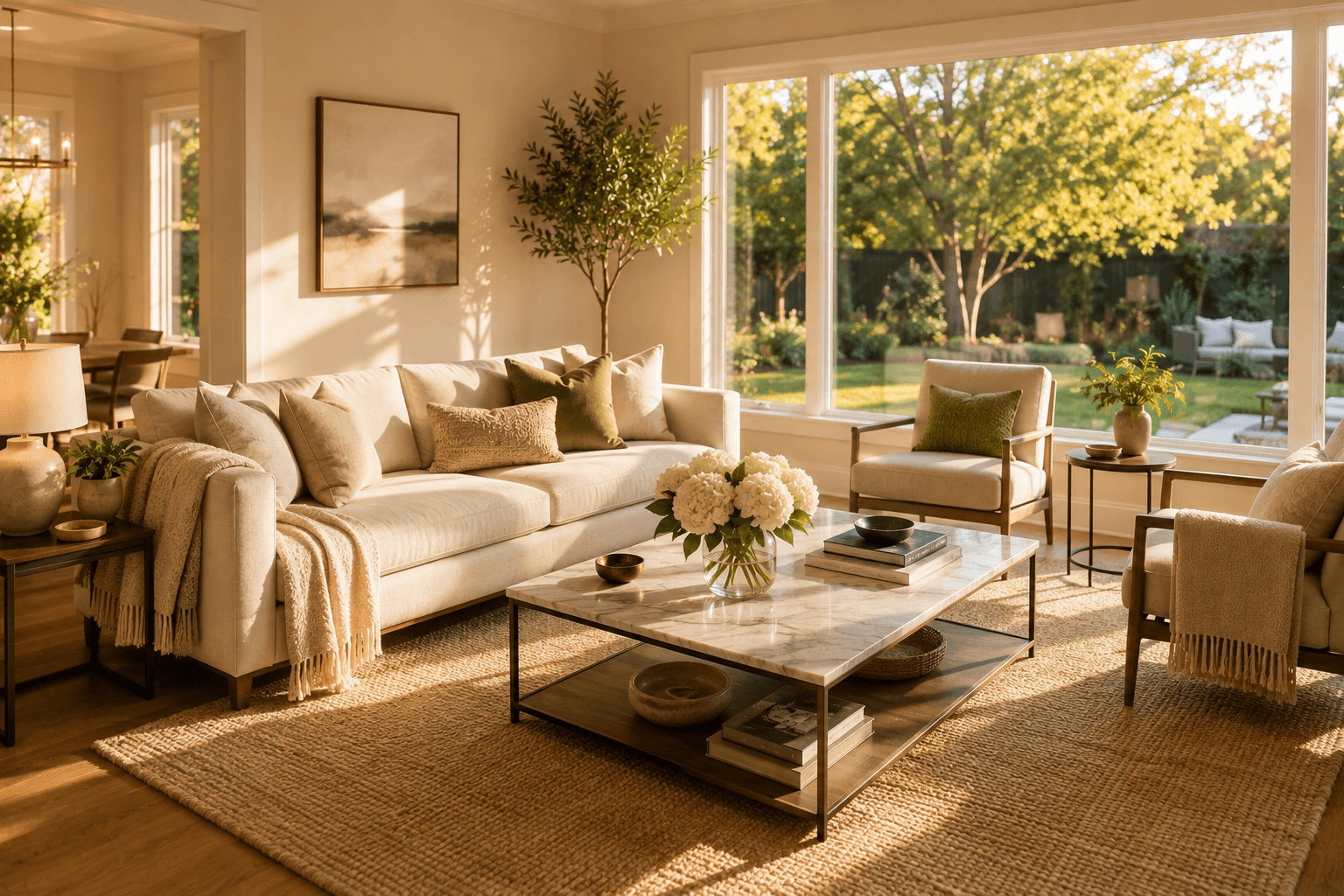
Home Staging Tips: How to Help Your Listings Sell Faster
Staged homes sell 73% faster and for 1-5% more. Practical staging tips for real estate agents, from DIY tricks to working with professional stagers.
Hailey JeonMarketer, vProp13 min read
TL;DR
Staging has real numbers behind it now, not just conventional wisdom. NAR's 2025 Profile of Home Staging found about half of sellers' agents saw reduced time on market, with roughly one in five calling that reduction significant.
Close to three in ten agents also reported staging led to noticeably higher offers, typically 1% to 10% above what buyers would have offered otherwise. That makes staging less of an aesthetic nice-to-have and more a normal part of pricing strategy.
You already know that first impressions matter in real estate. But how much do they actually matter? According to NAR's 2025 Profile of Home Staging, about half of sellers' agents report staged homes see reduced time on market, with roughly 1 in 5 calling that reduction significant. Close to 3 in 10 agents also reported that staging led buyers to offer noticeably more, typically somewhere in the 1% to 10% range above what they otherwise would have.
For agents, those numbers should change how you approach every listing conversation. Staging isn't just a nice extra. It's one of the most reliable tools you have to reduce days on market and protect your seller's bottom line.
This guide covers practical home staging tips you can share with your sellers, whether they're working with a tight budget or ready to invest in professional help.
Why Staging Works (And Why Agents Should Lead the Conversation)
Most sellers understand their home needs to look "nice" for showings. Fewer understand the psychology behind staging. Buyers make snap judgments fast, and NAR's own staging research backs that up: a large majority of buyers' agents say staging makes it easier for their clients to picture a property as their future home before a buyer's inner critic ever kicks in.
A well-staged home does three things at once:
It helps buyers picture themselves living there. Personal items, bold decor choices, and cluttered spaces make that harder.
It highlights the property's strengths. Strategic furniture placement draws attention to architectural details, natural light, and room proportions.
Hailey Jeon
Marketer, vProp
Hailey Jeon is a marketer at vProp, writing about real estate marketing, listing videos, and the tools agents use to win and market listings. Hailey's guides focus on practical steps agents can use on their very next listing.
It photographs better. And in 2026, the listing photos are the first showing. If the home doesn't look good on screen, many buyers will never schedule a visit. Strong real estate photography tips paired with good staging can make a massive difference in click-through rates.
As the listing agent, you're in the best position to guide this process. Sellers trust your judgment on pricing. They should trust your staging recommendations too.
DIY Staging vs. Professional Staging: A Cost Comparison
Not every listing needs a professional stager. And not every seller can afford one. Part of your job is helping sellers choose the right level of staging investment for their property and price point.
Professional Staging
A professional stager typically charges between $1,500 and $5,000 for an initial consultation plus furniture rental for a few key rooms. For luxury listings or vacant properties, costs can run higher. The investment usually pays for itself: NAR's 2025 Profile of Home Staging found that close to 3 in 10 sellers' agents saw staging lead to buyers offering more, generally somewhere in the 1% to 10% range above what they'd have offered otherwise.
Professional staging makes the most sense for:
Vacant homes (empty rooms photograph poorly and feel cold)
Higher-priced listings where the ROI justifies the cost
Properties with unusual layouts that need creative solutions
DIY Staging (Agent-Guided)
For listings in the mid-range or below, you can guide sellers through a DIY staging process for little to no cost. This usually involves decluttering, rearranging existing furniture, improving lighting, and adding a few inexpensive accessories.
A reasonable DIY staging budget runs between $200 and $500, covering items like fresh towels, a few plants, new throw pillows, and some updated light fixtures. Many agents keep a small staging kit on hand with neutral accessories they rotate between listings.
Virtual Staging
There's also a middle path that's become increasingly popular. Virtual staging lets you furnish empty rooms digitally for listing photos, often at a fraction of the cost of physical staging. This works especially well for vacant properties where buyers struggle to visualize the space. If you're working with vacant listings, virtual staging for vacant listings is worth exploring as a cost-effective complement to physical prep work.
Room-by-Room Priorities: Where to Focus First
You probably can't stage every room to perfection, especially on a budget. So focus on the rooms that matter most to buyers. Research and buyer surveys consistently point to the same hierarchy:
Living Room
This is the room buyers spend the most mental energy evaluating. It sets the tone for the rest of the home. Keep furniture arrangements simple and open. Create a clear focal point, whether that's a fireplace, a large window, or a well-placed piece of art. Remove at least a third of the furniture if the room feels crowded.
Kitchen
Kitchens sell houses. You've said it to clients a hundred times because it's true. For staging purposes, clear all countertops except for one or two decorative items. A cutting board with a bowl of lemons. A simple cookbook stand. Clean appliances until they shine. If cabinet hardware looks dated, swapping it out costs under $100 and takes an afternoon.
Primary Bedroom
Buyers want the primary bedroom to feel like a retreat. Neutral bedding, matching nightstands, and minimal clutter go a long way. Remove personal photos and anything that makes the room feel like it belongs to someone specific. A couple of accent pillows and a folded throw at the foot of the bed add polish without looking overdone.
Bathrooms
Fresh white towels rolled on the counter. A small plant. Spotless grout and fixtures. That's about all it takes. Bathrooms don't need much staging, but they absolutely need to be clean. A grimy bathroom can undo the goodwill earned by a beautifully staged living room.
Decluttering and Depersonalizing: The Foundation of Every Staging Plan
Before any furniture gets moved or any accessories get placed, the home needs to be stripped down. This is probably the hardest conversation you'll have with sellers, because you're asking them to un-live in their own house.
The Decluttering Conversation
Frame it around the goal, not the criticism. Instead of "Your house has too much stuff," try "Buyers need to see the space itself, not what's in it. The less they see of your life here, the easier it is for them to imagine their own."
A good rule of thumb: remove 50% of what's on shelves, counters, and surfaces. Pack away collections, memorabilia, and most decorative items. Every surface should have breathing room.
Depersonalizing Without Sterilizing
There's a balance to strike. A home that feels completely empty of personality can feel cold and uninviting. The goal is neutral warmth. Remove family photos, kids' artwork on the fridge, religious items, and political materials. Replace them with simple, universally appealing decor. A few books, a ceramic vase, a neutral piece of art.
Storage is also part of the equation. Buyers open closets. They check cabinet space. If every closet is stuffed to bursting, it signals that the home doesn't have enough storage, even if it does. Recommend that sellers rent a small storage unit for the listing period. It costs $50 to $150 per month and makes a noticeable difference.
Furniture Placement, Flow, and Making Rooms Feel Bigger
How furniture is arranged matters as much as what furniture is in the room. Bad placement can make a large room feel cramped or a small room feel awkward.
The Principles
Create clear pathways. Buyers should be able to walk through each room without weaving around furniture. A clear path from the entrance to the main seating area is essential in living spaces.
Float furniture away from walls. It sounds counterintuitive, but pulling sofas and chairs a few inches from the wall actually makes a room feel larger. It creates the illusion of more space.
Define zones in open floor plans. If the listing has a combined living and dining area, use furniture and rugs to create distinct zones. This helps buyers understand how the space functions in daily life.
Remove oversized pieces. That massive sectional that seats eight? It might be comfortable, but it's probably making the room look smaller than it is. A smaller sofa with a couple of armchairs reads better in photos and in person.
A Quick Furniture Audit
Walk through each room and ask two questions. First, does every piece of furniture serve a clear purpose in this room? Second, can a buyer easily move through the space? If the answer to either question is no, something needs to go.
Lighting and Ambiance: The Details That Shape How a Home Feels
Lighting is one of the most underrated staging elements. A dim, poorly lit home feels smaller, older, and less inviting. Good lighting can shift the entire mood of a space.
Natural Light First
Open all curtains and blinds for showings. If window treatments are heavy or dark, consider replacing them with sheer white panels. Natural light is the single most requested feature among buyers, so let as much of it in as possible.
Layered Artificial Lighting
Every room should have at least three light sources: overhead lighting, a table or floor lamp, and accent lighting if appropriate. This creates depth and warmth.
Bulb temperature matters more than most people realize. Stick with warm white bulbs (2700K to 3000K) throughout the home for a consistent, inviting feel. Cool white or daylight bulbs can make residential spaces feel clinical. Replace any burned-out bulbs, and consider upgrading to higher-wattage options in darker rooms.
Small Touches
A few candles (unlit during showings, but present for visual warmth), fresh flowers on the dining table, and a subtle plug-in air freshener in a clean scent can round out the ambiance. Avoid overpowering scents. The "fresh-baked cookies" trick has become a cliche, and many buyers find heavy fragrances suspicious, like they're masking a problem.
Curb Appeal and Exterior Staging: The First First Impression
The home's exterior sets expectations before the buyer ever opens the front door. And with online listings, the exterior photo is often the very first image a buyer sees. Neglecting curb appeal can cost you clicks and visits.
Quick Exterior Wins
Front door. A freshly painted front door in a contrasting color is one of the highest-ROI improvements a seller can make. Cost: about $50 in paint and supplies.
Landscaping. Trim overgrown bushes, mow the lawn, edge the walkways, and add a few potted plants by the entrance. A couple of planters with seasonal flowers cost under $30 and make the entrance feel cared for.
Power washing. Driveways, walkways, and siding accumulate grime over time. A rented power washer ($50 to $75 for a day) can take years off the home's appearance.
House numbers and mailbox. If they look dated, replace them. Modern, clean house numbers and a fresh mailbox are inexpensive details that signal a well-maintained property.
Outdoor lighting. Solar path lights along the walkway cost $20 to $40 for a set and make evening showings more welcoming.
These exterior improvements don't just help with in-person visits. They improve how the listing performs online too. Better curb appeal means better photos, which means more listing visibility online.
How to Pitch Staging to Reluctant Sellers
This might be the most important section for agents. Many sellers resist staging advice. They take it personally. They see it as criticism of their home and their taste. Your ability to handle this conversation directly affects how many of your listings get properly staged.
Lead With Data
Numbers are your best friend here. Share the NAR statistics on staged vs. unstaged homes. Show them local examples if you have them. "Comparable homes in this neighborhood that were staged sold in an average of 14 days. Unstaged ones sat for 45." Concrete, local data is more persuasive than national averages.
Frame Staging as Marketing
Sellers understand that their home is a product going to market. Position staging as part of the marketing plan, not as home improvement. "We're not changing your home. We're packaging it so buyers can see its full potential." This framing tends to reduce defensiveness.
Offer to Handle the Heavy Lifting
Many sellers feel overwhelmed by the prospect of staging, especially if they're also dealing with a move, life transitions, or tight timelines. Offer to coordinate the process. Bring in your stager. Provide a checklist. Have a recommended list of affordable movers or storage options. The easier you make it, the more likely sellers are to say yes.
Address the Cost Concern
If a seller balks at spending $1,500 on professional staging, reframe it against the potential return. On a $400,000 home, even a 1% increase in sale price means $4,000 extra. A reduction in days on market means fewer mortgage payments, less carrying cost, and less risk of a price reduction. The math almost always favors staging.
Know When DIY Is Enough
For some listings, a full professional staging setup is overkill. Be honest with sellers about what level of effort their property actually needs. Sometimes a thorough declutter, some rearranging, and a deep clean are all it takes. Sellers appreciate an agent who gives them proportionate advice rather than pushing maximum spending on every listing.
Bringing It All Together: Your Staging Checklist
A staged home sells faster, photographs better, and in most cases, closes at a higher price. As an agent, recommending staging to your sellers isn't optional anymore. It's a core part of your listing strategy.
Here's a quick-reference checklist you can share with sellers:
[ ] Declutter every room, removing 50% of items from surfaces and shelves
[ ] Depersonalize by packing away family photos, collections, and personal items
[ ] Deep clean the entire home, including windows, grout, and appliances
[ ] Rearrange furniture for clear pathways and open sightlines
[ ] Remove oversized or excess furniture pieces
[ ] Update lighting with warm white bulbs and add lamps where needed
[ ] Open all curtains and replace heavy window treatments with sheers
[ ] Stage the kitchen with clear counters and one or two simple accessories
[ ] Refresh the primary bedroom with neutral bedding and minimal decor
[ ] Clean bathrooms thoroughly and add fresh white towels
[ ] Boost curb appeal with a painted front door, trimmed landscaping, and clean walkways
[ ] Consider virtual staging for vacant listings if the property is empty
For more ways to market your listings without a big budget, check out these low-cost marketing ideas that pair well with a solid staging plan. And if you're looking to go beyond photos, selling homes faster with video walks through how to showcase staged spaces through listing videos and walkthroughs.
Staging is one of those areas where a small investment of time and money consistently delivers outsized results. The agents who build staging into their standard listing process tend to sell faster, earn better reviews, and win more referrals. That's a pattern worth paying attention to.
Frequently Asked Questions
Does home staging actually reduce time on market?
According to NAR's 2025 Profile of Home Staging, about half of sellers' agents report staged homes see reduced time on market, with roughly 1 in 5 calling that reduction significant.
Does staging increase the sale price?
Close to 3 in 10 agents reported that staging led buyers to offer noticeably more, typically in the 1% to 10% range above what they otherwise would have.
Do sellers need to hire a professional stager?
No. This guide covers both DIY staging tips for tight budgets and professional staging for sellers ready to invest more.
 Hailey JeonMarketer, vProp13 min read